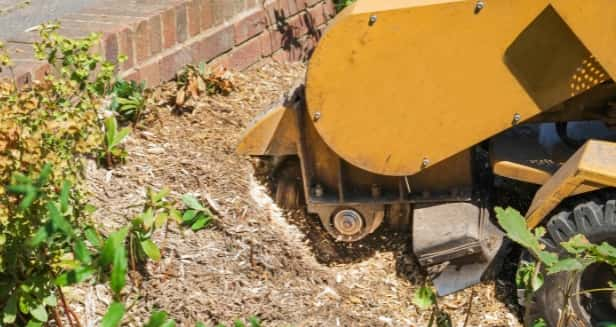
Removing a tree does not necessarily remove every obstacle associated with it. Once the trunk and branches have gone, the remaining stump can still occupy valuable space, interfere with future garden plans and make routine maintenance around the area more awkward. The situation can become more challenging when the stump is positioned somewhere that is difficult to access.
A stump may be located behind a narrow side entrance, within a confined garden, close to a fence or surrounded by established landscaping. These conditions do not automatically mean that stump grinding is unsuitable, but they do make careful assessment and planning particularly important.
For property owners in Ware, Hertfordshire, professional stump grinding can provide a practical way to deal with awkwardly positioned tree stumps. The key is to understand the stump itself, the available access and everything surrounding the working area before deciding how the job should be approached.
Can Difficult-to-Reach Tree Stumps Still Be Ground?
In many situations, yes. Restricted access does not necessarily prevent stump grinding from being carried out.
The feasibility of the work depends on several factors, including the size and position of the stump, the available route into the garden, nearby structures and how much working space exists immediately around it.
Rather than considering the stump in isolation, a professional assessment looks at the complete route from the property entrance to the working area. This helps determine how the equipment can reach the stump and how the work can be completed while taking account of the surrounding garden.
Why Are Some Tree Stumps Difficult to Access?
Tree stumps can become difficult to reach for many different reasons.
A tree may originally have been planted while the garden was relatively open. Over time, fencing, extensions, sheds, patios, paths, planting beds and other landscaping features may have been introduced around it.
By the time the tree is removed, the route to the remaining stump can be considerably more restricted.
In other cases, the tree may simply have grown in an awkward location from the beginning, such as a narrow side garden, enclosed corner or densely planted section.
Narrow Garden Entrances Need Careful Assessment
One of the first considerations is how stump grinding equipment will reach the working area.
Many properties have side passages, gates or other access points between the front and rear gardens. The available width and any changes in direction can influence which equipment is suitable.
The complete access route needs to be considered rather than measuring the entrance alone.
A gate may provide sufficient width, for example, but a tight corner immediately beyond it could create another restriction.
Steps and Changes in Ground Level Can Affect Access
Access is not always on one level.
Steps, raised patios, sloping gardens and changes in surface height can make moving equipment more complicated. The ground also needs to provide suitable support along the intended route.
These features should be identified before work begins.
Planning the access properly reduces the likelihood of reaching the garden only to discover that another obstacle prevents the equipment from reaching the stump itself.
Confined Gardens Can Limit Working Space
Getting to the stump is only one part of the challenge.
Once the equipment reaches the location, there needs to be sufficient space to work around the stump safely and effectively. A stump positioned in an open lawn presents a very different working environment from one surrounded by walls, fencing and established planting.
The available operating area can influence how the stump is approached and how much of it is accessible.
This is why the immediate surroundings should form part of the initial assessment.
Stumps Close to Fences Require Extra Planning
Trees frequently grow close to garden boundaries, leaving their stumps near fencing after removal.
This can restrict access to one side of the stump and may also mean that part of the root flare extends towards or beneath the boundary.
The condition and position of the fence need to be considered before grinding begins.
Where access remains practical, the exposed and accessible stump material can often be reduced while working carefully around the surrounding features.
Stumps Beside Walls and Buildings Can Be More Complex
A stump positioned close to a wall or building requires a more considered approach than one standing in the middle of an open garden.
The available working space may be limited, and the relationship between the stump, roots and neighbouring structure needs to be understood.
It should not be assumed that every part of the stump can automatically be reached simply because the upper surface is visible.
Professional assessment helps establish what can be practically ground and how the equipment can be positioned around the available space.
Garden Sheds and Outbuildings Can Restrict the Approach
Sheds and other garden structures can sometimes leave a stump trapped within a narrow section of the garden.
The issue may not be the stump itself but the route required to reach it.
Where the access is restricted, measurements and equipment suitability become important. It may still be possible to grind the stump without disturbing surrounding structures, provided that an appropriate working route exists.
Assessing this before arriving with unsuitable equipment helps the work proceed more efficiently.
Established Planting Can Make Access More Sensitive
Mature gardens can contain shrubs, borders and other planting that homeowners understandably want to retain.
A stump positioned among established plants requires careful consideration because access should not be planned solely around the shortest route.
Where practical, a more suitable approach may help reduce unnecessary disturbance to surrounding garden features.
At Ware Tree Surgeons, the stump and its surroundings can be assessed together so that the proposed approach reflects the actual layout of the garden.
Stumps Within Raised Beds Can Present Additional Challenges
Raised beds can create another access consideration.
The stump may sit above the surrounding garden level, or retaining edges may restrict how equipment can approach it. There may also be limited space around the stump because other plants occupy the same bed.
The height, width and construction of the surrounding area should therefore be considered before grinding.
The objective is to determine whether the stump can be accessed effectively without assuming that the surrounding garden must be unnecessarily disturbed.
Patio and Paving Areas Need to Be Considered
Some stumps are located beside patios, paving or garden paths.
In these situations, the relationship between the stump and nearby hard landscaping matters. Roots and the base of the stump may extend towards adjoining surfaces, while access equipment may need to travel across finished areas to reach the working location.
A site assessment can establish the most suitable route and determine how much working space is available around the stump.
This allows the stump grinding process to be planned around the existing garden rather than treating surrounding surfaces as an afterthought.
Large Stumps Can Be More Challenging in Restricted Spaces
Stump size becomes particularly important when access is limited.
A larger stump naturally occupies more working space and may have a substantial root flare extending beyond the visible trunk. This can make positioning equipment more difficult when walls, fencing or planting surround the area.
The size visible above ground is not always the complete picture.
The shape of the stump at ground level and the extent of accessible root flare also influence how the work should be approached.
Low-Cut Stumps Can Sometimes Be Harder to Identify Clearly
After a tree has been felled, the remaining trunk may be cut relatively close to ground level.
Although this can make the stump less visually prominent, surrounding grass, soil or vegetation may conceal its true dimensions.
Before grinding begins, the working area needs to be clearly identified.
Understanding the full extent of the accessible stump helps determine how equipment should be positioned and which surrounding features require particular attention.
Stump Grinding Is Different From Digging Out a Stump
Stump grinding and complete excavation are different approaches.
Grinding uses specialist machinery to progressively reduce accessible stump material into smaller fragments. This avoids the need to physically pull the complete stump and extensive root system from the ground.
This can be particularly useful in established gardens where large-scale excavation would create considerable disruption.
However, stump grinding does not mean that every underground root throughout the garden is removed. Roots extending away from the main stump generally remain beneath the ground and naturally change over time.
How Far Down Can a Stump Be Ground?
The achievable grinding depth depends on the stump, equipment, surrounding ground and what is safely accessible.
The purpose is generally to reduce the main stump sufficiently for the intended future use of the area.
This is an important point because the required outcome may differ between properties.
A homeowner planning to reinstate a lawn may have different requirements from someone preparing the area for wider landscaping work. Understanding the intended use helps determine an appropriate grinding approach.
The Future Use of the Area Matters
Stump grinding should not be considered only as a removal exercise.
It is also useful to think about what will happen to the area afterwards.
The space might eventually become part of a lawn, planting area or another garden feature. Knowing this beforehand helps establish the extent of grinding that is appropriate and whether any additional preparation may be needed afterwards.
For properties in Ware, this can make stump removal part of a wider garden improvement rather than an isolated task.
What Happens to the Roots After Stump Grinding?
A common misconception is that grinding the stump removes the complete root system.
The machine concentrates primarily on the accessible stump and associated root flare around the immediate area. Roots extending farther beneath the garden normally remain underground.
This is usually very different from excavating the complete root system.
Understanding the distinction helps homeowners plan realistically for the area after the stump has been ground.
What Happens to the Material Produced During Grinding?
Stump grinding produces a mixture of finely ground timber and material from around the stump.
The amount produced depends largely on the size of the stump and how much material needs to be reduced.
Once grinding is complete, the area can be considered in relation to its intended future use.
Where further garden work is planned, the remaining space may require preparation appropriate to whatever surface, lawn or planting is intended to follow.
Hidden Obstructions Can Affect Stump Grinding
The visible stump is not always the only consideration.
Older gardens can contain stones, edging materials and other hidden objects around the base of a tree. These may have become concealed by soil and vegetation over time.
The immediate working area should therefore be assessed before grinding begins.
Unexpected hard materials can affect how the stump can be approached, making careful preparation an important part of professional stump grinding.
Several Access Restrictions Can Exist at the Same Property
Difficult access is rarely defined by one measurement.
A property might have a narrow entrance followed by a sharp corner, steps and then a confined working area around the stump. Each restriction may be manageable individually while their combination makes the job considerably more complicated.
This is why access should be considered from beginning to end.
A professional assessment can establish whether the entire route is workable rather than focusing only on whether equipment fits through the first gate.
Avoid Trying to Remove an Awkward Stump Without Suitable Equipment
A tree stump can be much more substantial than it appears above ground.
Attempting to dig out a large or awkwardly positioned stump manually can involve considerable disturbance because the main root structure may extend throughout the surrounding soil.
Where the stump is close to hard landscaping, fencing or established planting, uncontrolled excavation can also affect a much larger area than intended.
Professional stump grinding provides a more targeted approach by concentrating on the accessible stump rather than unnecessarily excavating the surrounding garden.
Can Stump Grinding Reduce Disruption to an Established Garden?
This is one of the principal reasons stump grinding can be particularly suitable for difficult locations.
Rather than excavating a broad area to remove the stump and roots physically, grinding concentrates work around the main stump.
The amount of disruption still depends on access, stump size and surrounding conditions, but careful planning can help retain serviceable parts of the garden wherever practical.
This can be especially valuable where mature landscaping has developed around the tree over many years.
Professional Assessment Is Particularly Important With Restricted Access
A straightforward stump in an open area and an awkward stump behind several access restrictions should not be approached in exactly the same way.
Before work begins, it is useful to establish:
- the approximate dimensions of the stump
- the available access width
- corners or narrow sections along the route
- steps and changes in ground level
- the working space around the stump
- nearby fencing, walls and structures
- surrounding planting and hard landscaping
- the intended use of the area afterwards
Considering these factors together helps determine whether stump grinding is suitable and how the work should be approached.
Why Specialist Stump Grinding Adds Value
The value of professional stump grinding is not simply having machinery capable of reducing a stump.
Difficult locations require judgement about access, equipment positioning and the relationship between the stump and surrounding garden. An appropriate plan can help keep the work focused on the area that genuinely requires attention.
At Ware Tree Surgeons, we assess the stump in its actual setting rather than considering its size alone. This allows the grinding work to be planned around the access and existing features of the property.
Difficult Access Does Not Automatically Mean the Stump Must Stay
Homeowners sometimes assume that an awkward stump cannot be removed because it sits behind a narrow entrance or within an established garden.
That is not necessarily the case.
Modern stump grinding equipment can make many restricted locations accessible, although every site needs to be considered individually. The important question is whether suitable equipment can reach the stump and operate effectively within the available space.
An assessment can provide a much clearer answer than judging the stump from its location alone.
Conclusion
Difficult-to-reach tree stumps can often still be dealt with through professional stump grinding. Narrow entrances, confined gardens, nearby fencing, walls, raised beds, established planting and changes in ground level can all make the work more challenging, but they do not automatically prevent it from being carried out.
Successful stump grinding begins with assessing the complete site. Access to the garden, working space around the stump, its size and position, surrounding features and the future use of the area all influence the most appropriate approach.
If you have an awkward or difficult-to-reach tree stump at your property in Ware, Hertfordshire, contact Ware Tree Surgeons. We can assess the stump and available access before recommending a suitable stump grinding approach that takes the surrounding garden into consideration.
Call us on: 01992 932 299
Click here to find out more about Ware Tree Surgeons
Click here to complete our contact form and see how we can help with your tree care needs.