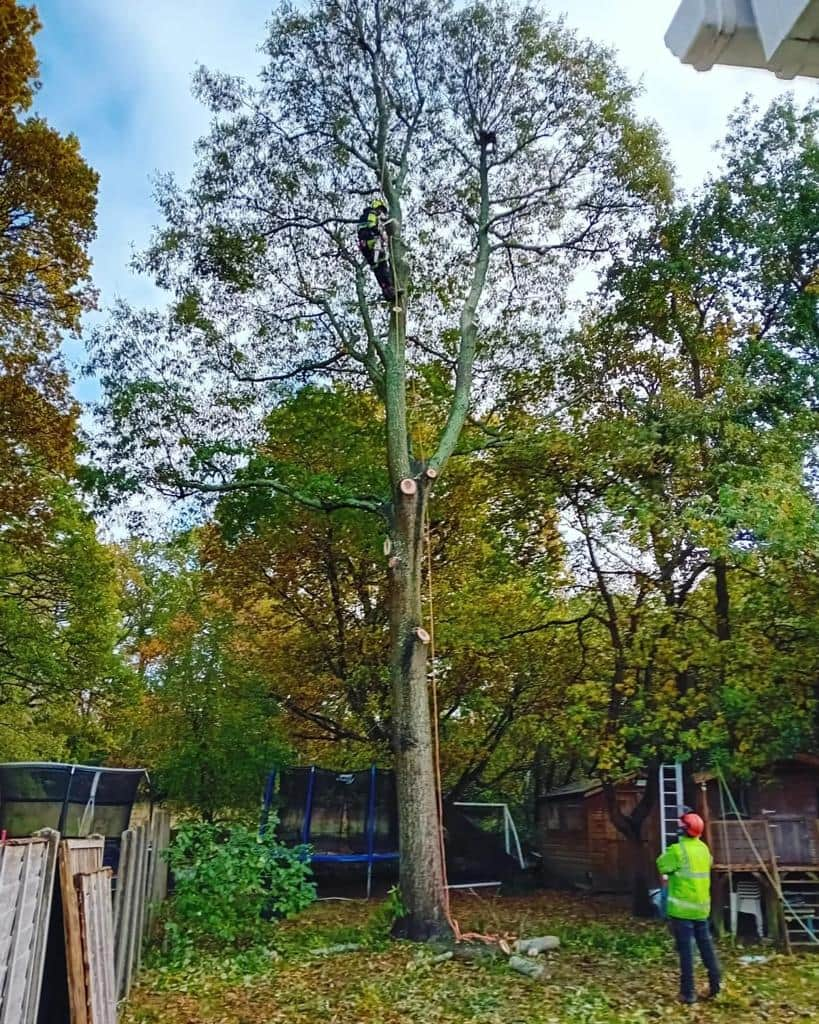
Tree pruning involves selectively removing particular branches to improve a tree’s condition, structure or relationship with its surroundings. When carried out correctly, it can support healthy growth, manage potential hazards and help a tree remain suitable for its location.
Effective pruning is not simply a matter of cutting back any branch that appears inconvenient. The position, size and condition of each branch must be considered, along with the species, age and natural form of the tree. Professional knowledge helps ensure that the work achieves a clear purpose without causing unnecessary stress or leaving damaging wounds.
How Professional Tree Pruning Benefits Your Trees and Garden
The most suitable pruning method depends on what the tree needs. Work may involve removing deadwood, correcting crossing branches, improving clearance or reducing selected areas of growth. The following seven benefits explain why professional assessment and technique matter.
1. Removes Dead, Damaged and Weakened Branches
Dead or damaged branches can deteriorate further and may eventually fall. Some remain attached for long periods, making their condition difficult to judge from ground level.
Professional pruning removes affected growth in a controlled manner while avoiding unnecessary cuts to healthy parts of the crown. This can reduce the amount of unstable material within the tree and prevent failing branches from damaging neighbouring limbs as they break away.
2. Supports Healthier Growth
Pruning can improve a tree’s condition by removing branches that are diseased, badly damaged or placing avoidable strain on the crown. Eliminating selected problem growth allows the tree to direct its resources towards healthier branches.
Correct cuts are important because poor pruning can create wounds that heal slowly or encourage weak regrowth. A tree surgeon will consider where each cut should be made so the tree can respond naturally.
Pruning does not cure every health issue, but it can form an important part of managing a tree that is otherwise capable of continued healthy growth.
3. Improves the Structure of the Crown
Young and mature trees can both develop structural weaknesses. Crossing branches may rub against each other, tightly formed unions can become vulnerable, and several limbs may compete to become the main stem.
Selective pruning can improve the arrangement of branches and reduce these conflicts. Addressing structural problems early may prevent them from becoming more difficult to manage as the tree grows.
For mature trees, the aim is usually to make measured improvements while retaining as much sound growth as possible.
4. Creates Clearance Around the Property
Branches can gradually extend over paths, driveways, roofs, garden structures and seating areas. Low growth may also obstruct access or make routine garden maintenance difficult.
Professional pruning can create practical clearance without removing more of the crown than necessary. Instead of cutting every branch back to the same point, a tree surgeon can target the growth causing the obstruction and preserve the tree’s natural appearance.
This provides a more balanced result than repeated trimming of only the most accessible branches.
5. Improves Light and Space Within the Garden
A dense or poorly managed crown can cast significant shade over lawns, borders and nearby rooms. Suitable pruning may allow more light to pass through or beneath the canopy while maintaining the tree as an important garden feature.
Depending on the tree, this may involve removing selected congested branches, lifting lower parts of the crown or reducing particular areas of growth. The correct approach should be based on the tree’s form rather than an attempt to thin it indiscriminately.
Thoughtful pruning can help the tree fit its surroundings more comfortably without stripping away its character.
6. Maintains a Balanced and Attractive Shape
Uneven growth may develop because of past damage, nearby buildings, competing vegetation or incorrect earlier pruning. One side of the crown may become heavier, while vigorous shoots can distort the tree’s natural form.
Professional pruning can improve balance by selectively reshaping the crown. The objective is not to force every tree into a perfectly symmetrical outline, but to create a stable and visually appropriate form that reflects the species.
Good pruning should leave the tree looking managed rather than severely cut back.
7. Allows Problems to Be Identified Early
A professional pruning assessment can reveal issues that are not always apparent from ground level. These may include cavities, weak branch unions, decay, rubbing limbs or sections of declining growth.
Identifying concerns early helps determine whether pruning is sufficient or whether the tree requires further monitoring or a different form of tree surgery. It also prevents work from being planned around appearance alone when a structural or health issue needs attention.
Why Pruning Technique Matters
Removing too much foliage at once can place a tree under considerable stress. Incorrect cuts may also lead to rapid, weak regrowth or leave large wounds that the tree struggles to seal.
Professional pruning considers:
- The species and natural growth habit
- The age and condition of the tree
- The proportion of the crown being removed
- The location and size of each cut
- The balance between the roots and canopy
- The reason the work is required
- How the tree is likely to respond
This assessment helps ensure that the work is proportionate and provides a meaningful benefit.
When Should You Arrange an Assessment?
Professional advice may be useful if you notice:
- Dead or hanging branches
- Limbs rubbing or crossing
- An uneven or unbalanced crown
- Branches obstructing access
- Excessive growth close to the property
- Dense foliage reducing garden light
- Cracks or weakness around major branch unions
- A tree that has not been assessed for a long time
Not every tree needs frequent pruning. An inspection can determine whether work is necessary and which method is most appropriate.
Conclusion
Professional tree pruning can remove weakened branches, encourage healthier growth, improve crown structure and create useful clearance. It may also increase garden light, maintain an attractive shape and reveal developing problems before they become more serious.
The quality of the result depends on choosing the right branches and making suitable cuts rather than simply reducing the tree as much as possible. If a tree on your property requires assessment, Ware Tree Surgeons provides professional tree pruning in Ware, Hertfordshire. Contact the team to discuss the condition of your tree and arrange appropriate care.
Call us on: 01992 932 299
Click here to find out more about Ware Tree Surgeons
Click here to complete our contact form and see how we can help with your tree care needs.